
The Book of Kells: Faith, Art, and Ireland’s Enduring Spirit
The Book of Kells is one of the most important cultural and spiritual treasures in Irish history. Created around the 9th century by Celtic monks, it offers a remarkable insight into early Christian Ireland, monastic learning, and the artistic traditions of the Celtic world.
The manuscript contains the four Gospels of the New Testament, but its significance lies not only in its religious text. Its pages are richly decorated with intricate patterns, vibrant colours, Celtic knots, animals, and symbolic imagery. These designs reflect a world where faith, scholarship, and creativity were deeply connected.
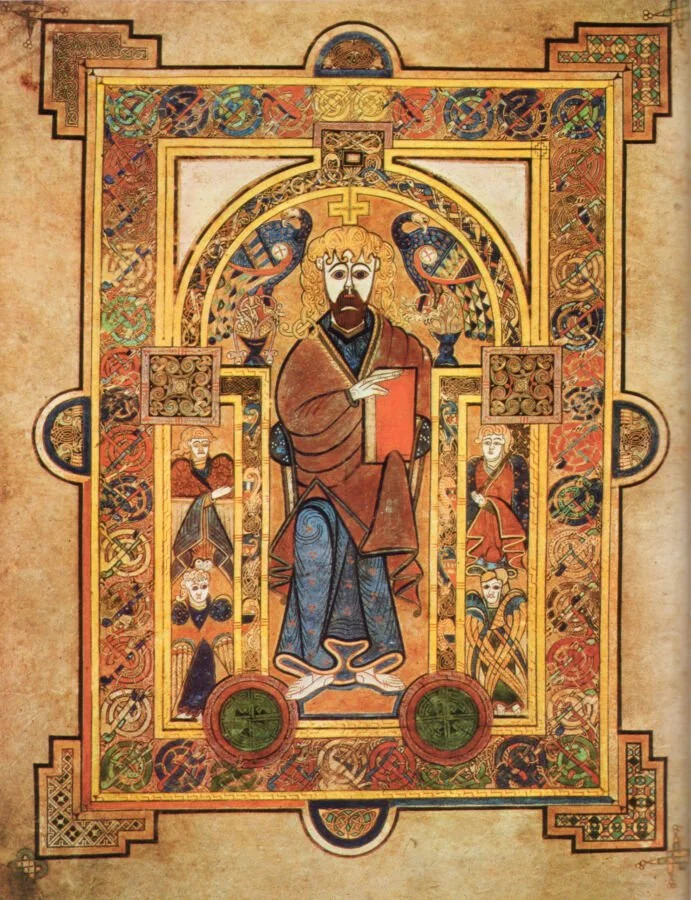
One of its most celebrated pages is the Chi Rho page, representing the name of Christ. Its extraordinary detail shows the level of devotion and craftsmanship that went into the manuscript’s creation.
The Book of Kells is also powerful because of its story of survival. It is believed to have begun on the island of Iona before being brought to Ireland for protection. Over the centuries, it survived Viking raids, conflict, loss, and the fragility of time. Its survival makes it more than a work of art. It is a symbol of cultural endurance.
Today, the manuscript is housed at Trinity College Dublin, where it continues to attract visitors from around the world. For those exploring Irish heritage, the Book of Kells represents much more than a famous artefact. It reflects Ireland’s early Christian identity, its love of learning, and its ability to preserve beauty through uncertainty.
In this sense, the Book of Kells carries Ireland’s story across centuries — a story of faith, imagination, resilience, and cultural memory.
Explore more heritage journeys here:
https://www.thecelticway.com.au/