
Discovering Irish family history with Liz Pigeon, genealogy, archives, and ancestral connection.
In a recent conversation on The Celtic Way Podcast
hyperlink: https://open.spotify.com/episode/3mKIOJdT8wydToXai7eFMs
Australian librarian and local history specialist Liz Pigeon shared practical advice on researching, preserving, and sharing family stories.
In a recent conversation, Australian librarian and local history specialist Liz Pigeon shared practical advice on researching, preserving, and sharing family stories. Drawing on her experience in genealogy, community archives, and oral history, she explained why official records, personal memories, and local libraries all play an important role in understanding where we come from.
How to Start Researching Your Family History
According to Liz, the first step is not necessarily to search online. It is to speak with older relatives, gather documents from around the home, and identify the people in family photographs. These early conversations can reveal names, dates, places, and stories that may not appear in official records.
The first step is to talk to older relatives. Conversations with parents, grandparents, or other family members often reveal names, places, dates, and stories that may never have been written down. Family photographs, letters, and documents stored around the house can also provide valuable clues that help build an accurate family history.
Liz also stresses the importance of verifying information through official records. Civil registration certificates, including birth, marriage, and death records, help confirm family relationships before moving on to more detailed research.
Rather than treating genealogy as a solitary activity, she encourages people to collaborate with relatives and local family history groups, where researchers often share knowledge and help each other overcome difficult research challenges.
How to Research, Preserve, and Share Your Family History
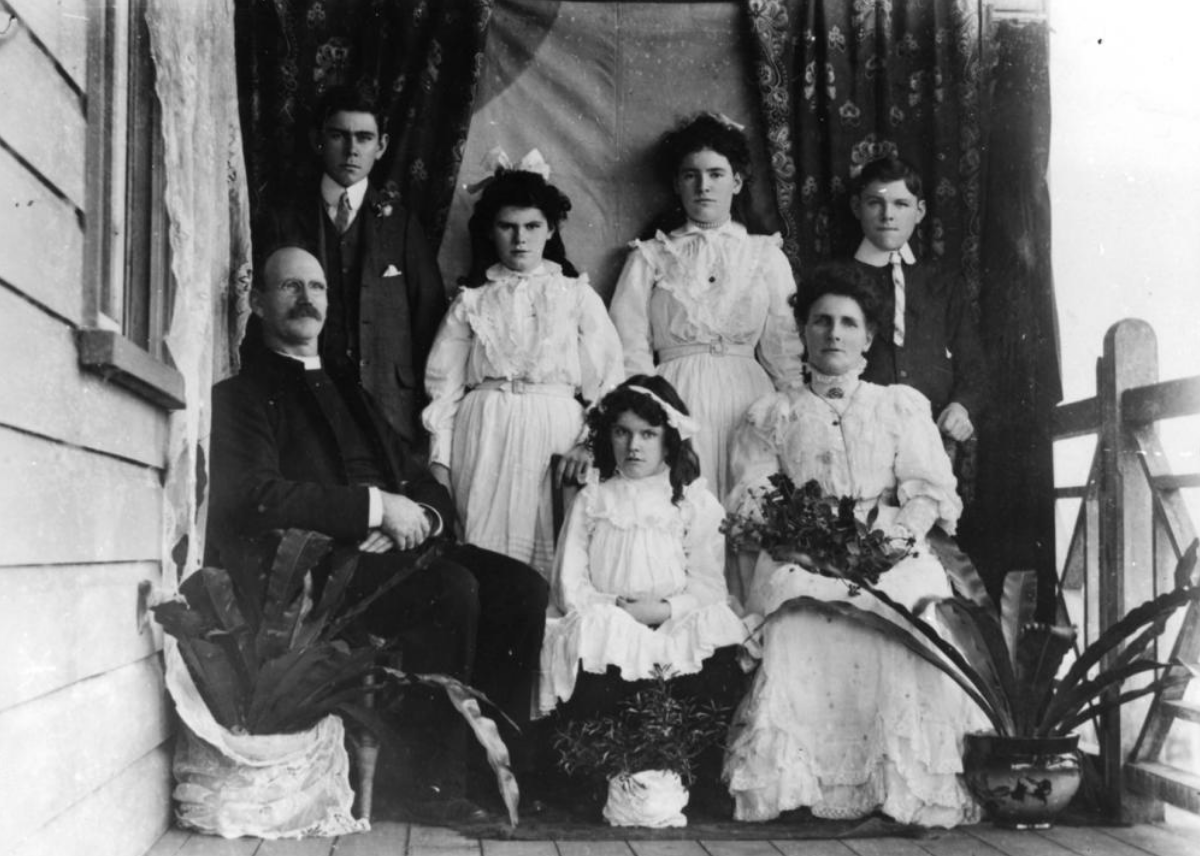
Image credit: Family portrait, 1900–1910, via State Library of Queensland / Wikimedia Commons, Public Domain.
For families with Irish, Scottish, or European backgrounds, Liz recommends completing as much Australian research as possible before searching international records.
Australian records often contain the names, dates, and locations needed to continue research overseas. However, she points out that many Irish records only identify a broad location, such as a county, rather than a specific townland. Without more detailed information, overseas research can quickly reach a dead end.
For families who migrated to Australia during the twentieth century, she recommends using immigration records available through the National Archives of Australia as a useful starting point.
Family History Can Reveal Unexpected Stories
Throughout the conversation, both Liz and the host reflect on how family history research sometimes uncovers unexpected discoveries.
Liz shares the story of her own father, who only discovered in his seventies that he had a half-sister. Learning about this previously unknown relationship also led to a greater understanding of his father, who had served during the Second World War but never returned home.
The host also describes a similar experience within her own family, where genealogy research revealed another cousin that relatives had never known about.
These stories highlight that researching family history is not simply about collecting facts. It can also bring emotional discoveries that require sensitivity and understanding from everyone involved.
Why Personal Memories Matter
One of the strongest themes throughout the conversation is that official records tell only part of the story.
Liz explains that personal memories, old letters, family photographs and oral histories often contain details that cannot be found in government records. These personal collections can also provide clues that lead researchers towards newspapers, archives and other historical sources.
She encourages families to identify the people shown in old photographs and to ask simple questions such as:
Who is this person?
When was this photograph taken?
Where was it taken?
Why was this moment important?
The discussion also highlights the importance of recording interviews with older relatives. Beyond preserving their stories, recordings also capture their voices, accents, and unique ways of speaking, creating a lasting record for future generations.
Libraries as Keepers of Community Memory
As a librarian, Liz describes libraries as much more than places to borrow books.
Local libraries preserve community history through archives, exhibitions, publications, walking tours and family history programs. They also collect stories that may never appear in official government records.
She shares an oral history project involving migrants from eleven different countries. One participant recalled leaving her homeland unexpectedly as a teenager after her family arranged for her to escape by boat. Stories like these demonstrate how ordinary members of a local community may carry extraordinary personal histories.
Technology Has Changed Genealogy
Technology has transformed family history research by making historical records easier to access than ever before.
Liz discusses the growing role of digitized archives, DNA testing, artificial intelligence, and online genealogy platforms. These tools allow researchers to explore historical documents with newspaper collections and even visit ancestral locations virtually from home.
At the same time, she acknowledges that technology can create new challenges, particularly for researchers who spent many years collecting information before the internet became widely available.
Although technology has changed the way people research, Liz believes it should complement rather than replace personal stories and family memories.
Family Memories and a Sense of Belonging
The conversation concludes with a reminder that family history is ultimately about people.
According to Liz, many people begin researching because they want to understand where they come from and feel more connected to the places where they live. Libraries help strengthen that connection by bringing people together through community programs, local history collections, and shared stories.
Family history therefore becomes more than an investigation into the past. It becomes a way of preserving memories, building connections, and passing those stories to future generations.
Throughout the conversation, Liz Pigeon emphasizes that discovering family history is a combination of official records, personal memories, and the support of modern technology. While digital resources have made research more accessible, they cannot replace the stories shared by family members or the memories preserved in photographs, letters, and recorded conversations.
Family history is more than a collection of names and dates, it is a way of preserving memories, understanding our roots, and strengthening our connection to family and community.
If you're inspired to explore Irish family history and reconnect with your heritage, The Celtic Way's Irish Heritage Journeys offer the opportunity to experience Ireland through carefully curated small-group journeys that bring history, place, and personal stories together.
To learn more about our upcoming Irish Heritage Journeys, visit our website and discover where your own Irish story could begin. If you'd like to explore Irish history from home first, listen to our conversation with Australian librarian and local history specialist Irish Voices podcast on Spotify, where she shares insights into local history, research, and connections to the past.